
Introduction: The Premium Domain Confusion
If you’ve ever searched for a domain name and encountered pricing that ranges from $15 to $15,000 for seemingly similar names, you’ve stumbled into the world of premium domains. The term “premium domain name” creates confusion because it suggests quality or superiority, when in reality, it primarily refers to pricing structure and market positioning.
The word “premium” does not automatically mean a domain is better, more valuable for SEO, or essential for your business success. What it does mean is that someone, somewhere in the domain ecosystem, has decided this particular combination of letters deserves a higher price tag than standard registration fees.
This guide will eliminate the confusion by explaining exactly what a premium domain name is, why premium domains exist, how pricing works, when they make strategic sense, and when they represent unnecessary expense. You’ll learn to evaluate premium domains with the same rational framework you’d apply to any significant business investment.
What Is a Premium Domain Name: The Core Definition
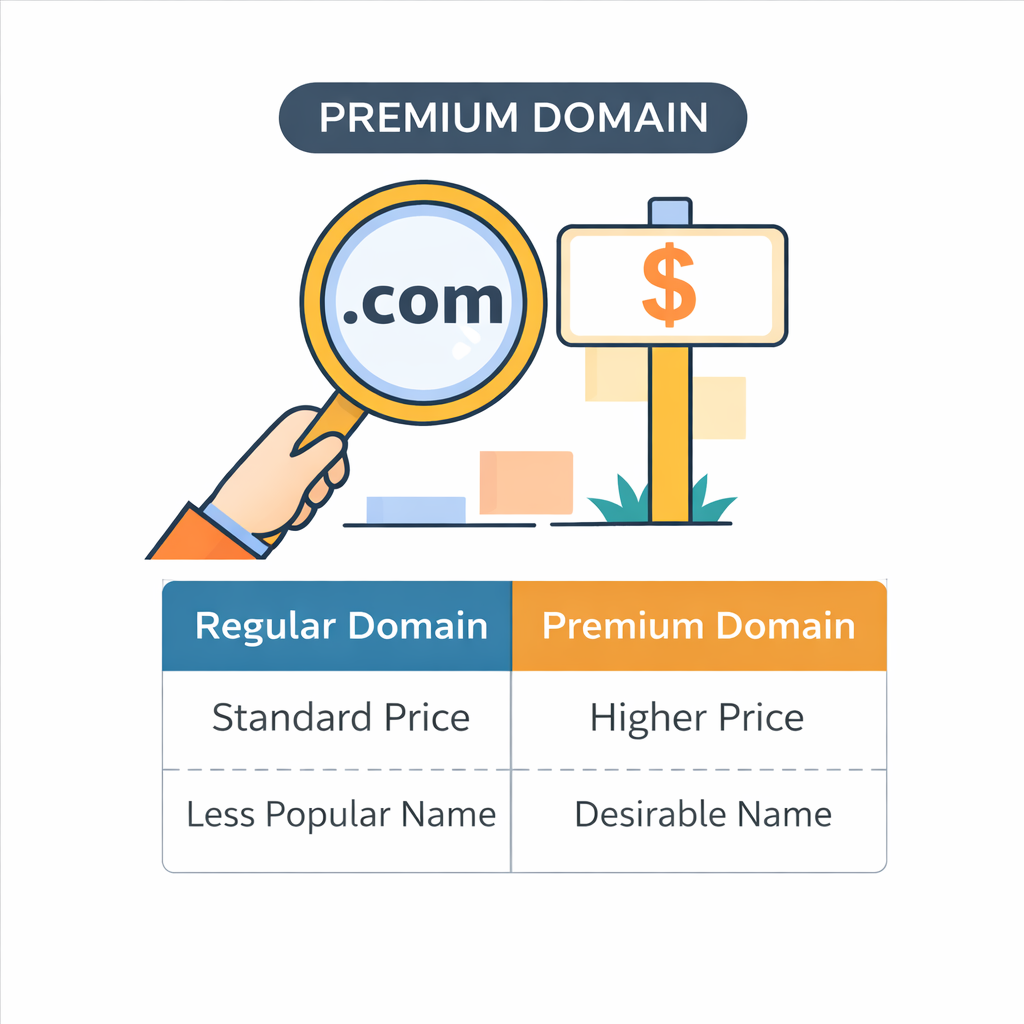
A premium domain name is any domain that carries a registration or purchase price significantly above the standard market rate for regular domains in that extension. While a typical domain might cost $10 to $20 per year, a premium domain in the same extension could range from $100 to millions of dollars.
The premium designation comes from one of two sources. First, domain registries themselves designate certain unreleased names as premium based on perceived market value, applying higher fees at the registry level. Second, domain investors purchase standard domains on the aftermarket and resell them at premium prices based on their assessment of commercial value.
Understanding what is a premium domain name requires recognizing that premium status reflects pricing policy, not inherent technical superiority. A premium domain functions identically to a regular domain from a technical standpoint. The DNS resolves it the same way, browsers load it at the same speed, and search engines index it using the same algorithms.
| Characteristic | Regular Domain | Premium Domain |
|---|---|---|
| Registration Cost | $10-$20/year | $100-$1,000,000+ |
| Renewal Pricing | Standard rate | May stay premium or revert to standard |
| Technical Function | Standard DNS resolution | Identical to regular domain |
| SEO Advantage | None inherent | None inherent |
| Availability | Wide selection | Limited, specific names |
The premium domain market operates on scarcity principles similar to real estate. Short domains, exact-match keywords, single dictionary words, and memorable brand-suitable names command higher prices because they cannot be duplicated. Once someone owns newyork.com, no one else can register that exact string in the .com namespace.
Why Premium Domain Names Exist
Premium domains exist because the domain name system creates artificial scarcity in a namespace with theoretically unlimited combinations. While millions of domain variations remain available, human psychology and business practicality narrow the pool of truly desirable names to a small fraction.
Domain registries recognized this dynamic early and began reserving high-value names during the initial release of new extensions. Rather than allowing these names to enter the standard registration pool at commodity prices, registries withheld them and established premium pricing tiers. This practice generates additional revenue for registries while ostensibly preventing domain speculation on the most valuable names.
The secondary market for premium domains emerged as early domain registrants recognized the commercial value of generic terms, short strings, and category-defining keywords. Individuals and companies acquired these domains at standard rates in the 1990s and early 2000s, then held them as appreciating digital assets. Today, the aftermarket for premium domains operates similarly to markets for other scarce resources, with prices determined by buyer demand, seller expectations, and negotiated transactions.
Registry-level premium pricing also serves a gatekeeping function. By pricing certain names beyond impulse purchase range, registries attempt to ensure that premium domains go to serious businesses willing to invest substantially in their digital presence. Whether this actually serves public interest or simply maximizes registry profit remains debated within the domain industry.
The existence of premium domains reflects economic reality. Businesses pay more for premium office locations, premium advertising placements, and premium telephone numbers. Domain names that offer marketing advantages, instant brand recognition, or competitive positioning command premium prices for the same fundamental reason: buyers perceive value that justifies the additional cost.
Types of Premium Domain Names
The premium domain landscape includes several distinct categories, each with different ownership structures, pricing models, and strategic considerations. Understanding these differences helps businesses evaluate whether a specific premium domain represents appropriate investment or avoidable expense.
Registry Premium Domains
Registry premium domains are names that the domain registry itself has designated as premium before general availability. When you attempt to register one of these domains, you encounter premium pricing directly from the registry, typically implemented through your registrar’s interface. The registry sets the premium fee, and all registrars must honor this pricing.
Registry premium domains may carry premium pricing only at initial registration, with renewals reverting to standard rates. Other registries maintain premium pricing throughout the domain’s lifecycle, meaning every renewal costs significantly more than a standard domain. This distinction matters enormously for long-term budget planning. At QOXY, we often see businesses surprised when they discover their annual renewal cost is 10 times higher than anticipated because the registry maintains premium renewal pricing.
Aftermarket Premium Domains
Aftermarket premium domains are previously registered domains that current owners are selling at prices above standard registration costs. These domains were acquired at regular rates, possibly decades ago, and now command premium prices based on the owner’s valuation of their commercial worth.
Unlike registry premiums, aftermarket pricing is entirely negotiable. The listed price represents the seller’s asking price, not a fixed fee. Buyers can make offers, negotiate terms, and potentially acquire the domain for substantially less than the advertised price. Once purchased, aftermarket domains typically renew at standard registry rates unless the domain extension itself has premium renewal policies.
Short Domains
Short domains, particularly those with three characters or fewer, command premium status due to pure scarcity. With only 26 letters in the alphabet, the pool of two-letter combinations is extremely limited. Three-letter domains offer more options but still represent a finite resource that has been largely exhausted in popular extensions.
Short domains appeal to businesses seeking maximum memorability and minimal typing friction. However, short does not automatically mean suitable. A random three-letter combination may qualify as premium by length but lack any meaningful connection to a business’s identity or industry.
Exact-Match Keyword Domains
Exact-match keyword domains contain the precise search terms users type when looking for specific products or services. Domains like insurance.com, hotels.com, or lawyer.com represent this category. These domains historically provided SEO advantages, though search engines have reduced the weight given to exact-match domains in ranking algorithms.
The premium value of keyword domains now derives more from user trust and direct navigation than from search ranking benefits. Users who type a generic term directly into their browser address bar expect the exact-match domain to be authoritative. This direct traffic can represent significant value for certain industries.
Brandable Premium Names
Brandable premium domains are pronounceable, memorable invented words or distinctive combinations that work well as company names. Examples include Spotify.com, Uber.com, or Zillow.com before these companies made them famous. These domains often command premium prices on the aftermarket because domain investors recognize their branding potential.
The premium status of brandable domains is more subjective than other categories. One person’s perfect brand name is another person’s meaningless jumble of letters. This subjectivity creates opportunities for savvy buyers to acquire quality brandable domains at reasonable prices by looking beyond the most obvious choices.
How Premium Domain Pricing Works
Premium domain pricing operates through several mechanisms, each with different implications for both initial purchase and ongoing ownership costs. Understanding these pricing structures prevents expensive surprises and enables accurate long-term cost forecasting.
Registry-level premium pricing applies fixed fees to specific domain names. When a registry designates premium status, they establish a one-time registration fee that all registrars must collect. Some registries use tiered pricing systems, categorizing premium domains into price bands based on perceived desirability. A highly sought term might sit in Tier 1 at $5,000, while a moderately attractive name might fall into Tier 3 at $500.
The question of premium renewals creates the most confusion. Some registries apply premium fees only to initial registration, allowing subsequent renewals at standard rates. Others maintain premium pricing indefinitely, meaning each annual renewal costs hundreds or thousands of dollars. This is why QOXY explains premium domains carefully to customers before purchase. A domain that costs $1,000 initially but renews at $15 per year represents a very different investment than one requiring $1,000 annually in perpetuity.
Aftermarket pricing follows an entirely different model. Individual domain owners set asking prices based on their assessment of market value, comparable sales, and sometimes, pure optimism. These prices are starting points for negotiation rather than fixed fees. Professional domain brokers can help navigate these negotiations, often securing substantial discounts from listed prices.
The same domain can carry vastly different premium prices depending on the extension and ownership situation. The term “insurance” might be registry premium at $10,000 in one extension, aftermarket priced at $5 million in .com, and completely unavailable in others. This pricing variance reflects the different perceived values of various domain extensions and individual seller motivations.
Payment structures for premium domains also vary. Registry premiums typically require full payment at registration. Aftermarket sales might offer payment plans, lease-to-own arrangements, or even revenue-sharing agreements for exceptionally expensive domains. These flexible terms can make premium domains accessible to businesses that couldn’t afford full upfront payment.
When a Premium Domain Makes Sense
Premium domains represent strategic investments for specific business scenarios where the cost justifies measurable advantages. Understanding these situations helps separate genuine opportunities from expensive vanity purchases.
Businesses building strong brand identity around a specific term benefit most from premium domains. If your company name is “Bright Marketing” and bright.com becomes available at $50,000, the investment might make sense if you’re committed to building a decades-long brand around that exact name. The domain becomes a permanent marketing asset that every business card, advertisement, and customer interaction reinforces.
Established companies with significant marketing budgets can justify premium domain costs more easily than startups. When you’re spending $100,000 monthly on advertising, investing $25,000 in a domain that makes your ads more effective and memorable represents a reasonable marketing expense. The premium domain cost becomes a one-time investment that improves returns on ongoing marketing expenditure. For guidance on selecting domains that support your brand, see how to choose your domain name.
Defensive registrations make sense for companies protecting established brands. If competitors or domain investors are likely to register confusingly similar domains, acquiring premium variants of your brand name protects against customer confusion and potential trademark issues. This defensive strategy works best when you’re already successful enough that impersonation becomes a real risk.
Industries where domain name directly impacts customer trust benefit more from premium domains. Legal services, financial advisors, and healthcare providers face higher scrutiny from potential clients. A premium domain that conveys immediate professionalism and legitimacy can influence initial trust formation in these fields. Understanding domain ownership becomes equally important when making such significant investments.
Direct navigation traffic provides quantifiable value that justifies premium pricing in some cases. If analytics show thousands of users typing your desired domain directly into browsers monthly, acquiring that domain captures traffic that would otherwise go to competitors or parked pages. This traffic has measurable conversion potential that can be weighed against domain cost.
When a Premium Domain Is NOT Worth It
Many businesses waste money on premium domains that provide no meaningful advantage over alternatives costing 99% less. Recognizing these situations protects against expensive mistakes driven by domain mythology rather than business logic.
Early-stage startups with limited capital should almost never purchase premium domains. The $20,000 that might go toward a premium domain could instead fund months of product development, marketing testing, or customer acquisition. Startups need to validate their business model before investing heavily in branding assets. Once you’ve proven market fit and secured funding, premium domains become more defensible investments.
Businesses with tight cash flow or those operating in highly competitive, low-margin industries should avoid premium domains unless they provide direct revenue advantages. If your business operates on 10% margins and struggles with quarterly cash flow, spending $30,000 on a domain represents unacceptable financial risk compared to investing that capital in inventory, equipment, or working capital.
Premium domains purchased purely for perceived SEO benefits represent wasted investment. Search engines explicitly state that domain names provide minimal ranking advantages. While exact-match domains might earn slight relevance signals, these pale compared to content quality, backlink profiles, and user experience factors. Spending $10,000 for SEO advantages that could be achieved through $2,000 in content development makes no financial sense.
Businesses without clear brand identity or market positioning should establish these fundamentals before acquiring premium domains. If you’re still testing different business names, target markets, or value propositions, locking in an expensive domain prematurely creates costly rigidity. Build your business first, then invest in premium domains that align with your proven brand direction.
Domains that require extensive customer education undermine premium value. If your premium domain is a misspelling, unusual extension, or non-obvious abbreviation that requires explanation, you’re paying premium prices for a name that creates friction rather than removing it. Premium domains should be instantly obvious and memorable, not puzzle users about spelling or meaning.
Common Myths About Premium Domain Names
The premium domain industry generates mythology that leads businesses to make poor decisions based on misconceptions rather than facts. Dispelling these myths enables more rational domain investment choices.
Myth: Premium Domains Rank Better on Google
This persistent myth claims premium domains receive preferential treatment in search results. The reality is that Google’s algorithms evaluate hundreds of ranking factors, with domain name playing a minimal role. Quality content, authoritative backlinks, site speed, and user engagement matter vastly more than whether your domain cost $15 or $15,000.
While exact-match domains once provided measurable ranking advantages, Google specifically reduced this weighting to prevent manipulation. Today, a new website on a premium domain starts with the same SEO blank slate as any other new domain. Your ranking success depends on what you build, not what you paid for the name.
Myth: Premium Means Exclusive Ownership Rights
Some buyers assume premium domains come with expanded ownership rights or protections. In reality, owning premium.com doesn’t prevent someone from registering premium.net, premium.org, or premium.shop. Domain ownership grants exclusive rights only to that specific string in that specific extension. Premium pricing doesn’t change these fundamental ownership boundaries.
Trademark law provides the actual protection businesses need, not premium domain status. Establishing trademark rights in your business name offers far broader protection than domain ownership alone. The relationship between domain names and trademarks operates independently of whether your domain carries premium pricing.
Myth: You Must Buy Premium to Look Professional
Marketing from domain sellers sometimes implies that professional businesses require premium domains to be taken seriously. This simply isn’t true. Thousands of successful companies operate on standard-priced domains they built into recognized brands through quality products and effective marketing.
Professionalism comes from business execution, not domain prestige. A beautifully designed website, excellent customer service, and reliable products create professional perception. A premium domain without these fundamentals impresses no one, while a standard domain supporting a great business builds trust naturally.
Myth: Premium Domains Are Always Good Investments
Domain investors promote the narrative that premium domains always appreciate in value like real estate. While some domains do increase in value, many others languish unsold for years or lose relevance as language and technology evolve. Premium domains are illiquid assets that may take years to sell and require ongoing renewal costs during that period.
Unless you’re specifically in the domain investment business, purchasing premium domains as financial investments rarely makes sense. Buy premium domains you intend to use for your business, not ones you hope to flip for profit later.
Making the Right Premium Domain Decision
Approaching premium domain decisions with a structured framework helps separate emotion from logic and ensures investments align with business objectives rather than ego or domain mythology.
Start by establishing your total available budget, including both initial purchase and ongoing renewals. If a domain costs $5,000 initially but requires $500 annual renewals, factor five years of renewals into your decision. Hidden renewal costs have forced many businesses to abandon premium domains they couldn’t afford to maintain.
Evaluate your business longevity and commitment. Premium domains make sense only for businesses you expect to operate for many years. If you’re testing a business concept or exploring a new market, delay premium domain purchases until you’ve validated long-term viability. The domain will still be available for purchase once you’ve proven your model, or alternatives will serve just as well.
Consider your risk tolerance honestly. Can your business absorb the loss if the premium domain doesn’t deliver expected benefits? If losing the investment would significantly harm your company’s financial position, the domain represents excessive risk regardless of potential upside.
Compare the premium domain against realistic alternatives. Often, adding a descriptive word, using a different extension, or employing creative branding delivers 90% of the value at 1% of the cost. The marginal benefit of the perfect domain rarely justifies 100-fold price increases over good alternatives. Learn more about what makes an effective domain name beyond premium status.
Assess measurable value drivers rather than abstract benefits. Can you quantify likely direct navigation traffic, brand recognition improvement, or competitive advantages? If the benefits remain vague or unmeasurable, the investment lacks rational foundation. Premium domains should provide clear value you can articulate specifically, not just feel good about generally.
The right premium domain decision varies dramatically based on your business stage, financial position, and strategic objectives. What makes perfect sense for an established company with substantial marketing budgets represents terrible allocation of scarce capital for a bootstrapped startup. Evaluate premium domains within your specific business context rather than adopting general rules.
Final Checklist: Should You Buy That Premium Domain?
Before committing to a premium domain purchase, work through this decision framework to ensure the investment makes rational sense for your specific situation.
Budget Reality: Can you afford both the initial purchase and all future renewals without creating cash flow problems? Have you verified whether renewals stay premium or revert to standard pricing? Financial strain from domain costs undermines the business the domain was meant to support.
Business Purpose: Does this domain directly support your core business model and brand identity? Would the money deliver better results if invested in product development, customer acquisition, or operational improvements? Premium domains should enhance existing business strengths, not substitute for fundamental business building.
Long-Term Commitment: Are you committed to this business and brand name for at least five years? Have you validated your business model and target market enough to justify permanent branding decisions? Pivoting businesses waste premium domain investments on directions they abandon.
Measurable Value: Can you articulate specific, measurable benefits this domain provides over alternatives costing significantly less? Do you have evidence that customers will notice and value this particular domain? Vague benefits rarely justify concrete costs.
Alternative Assessment: Have you seriously evaluated alternatives and confirmed this premium domain provides unique value they cannot match? Are you selecting this domain based on rational analysis or emotional attachment to a specific name?
Understanding what is a premium domain name ultimately comes down to recognizing that premium reflects pricing strategy, not inherent superiority. These domains serve specific business purposes in particular circumstances, but they’re not universal requirements for online success. Evaluate each premium domain opportunity with the same rigor you’d apply to any significant business investment, and purchase only when clear value justifies the cost within your specific business context.
The domain you choose matters, but far less than what you build on it. A standard-priced domain supporting exceptional business execution outperforms a premium domain attached to mediocre products or services every time. Make domain decisions that align with your business reality, not domain industry marketing. Your success depends on serving customers well, not on what you paid for your web address. For more guidance on domain management, explore understanding the domain lifecycle to protect your investment long-term.